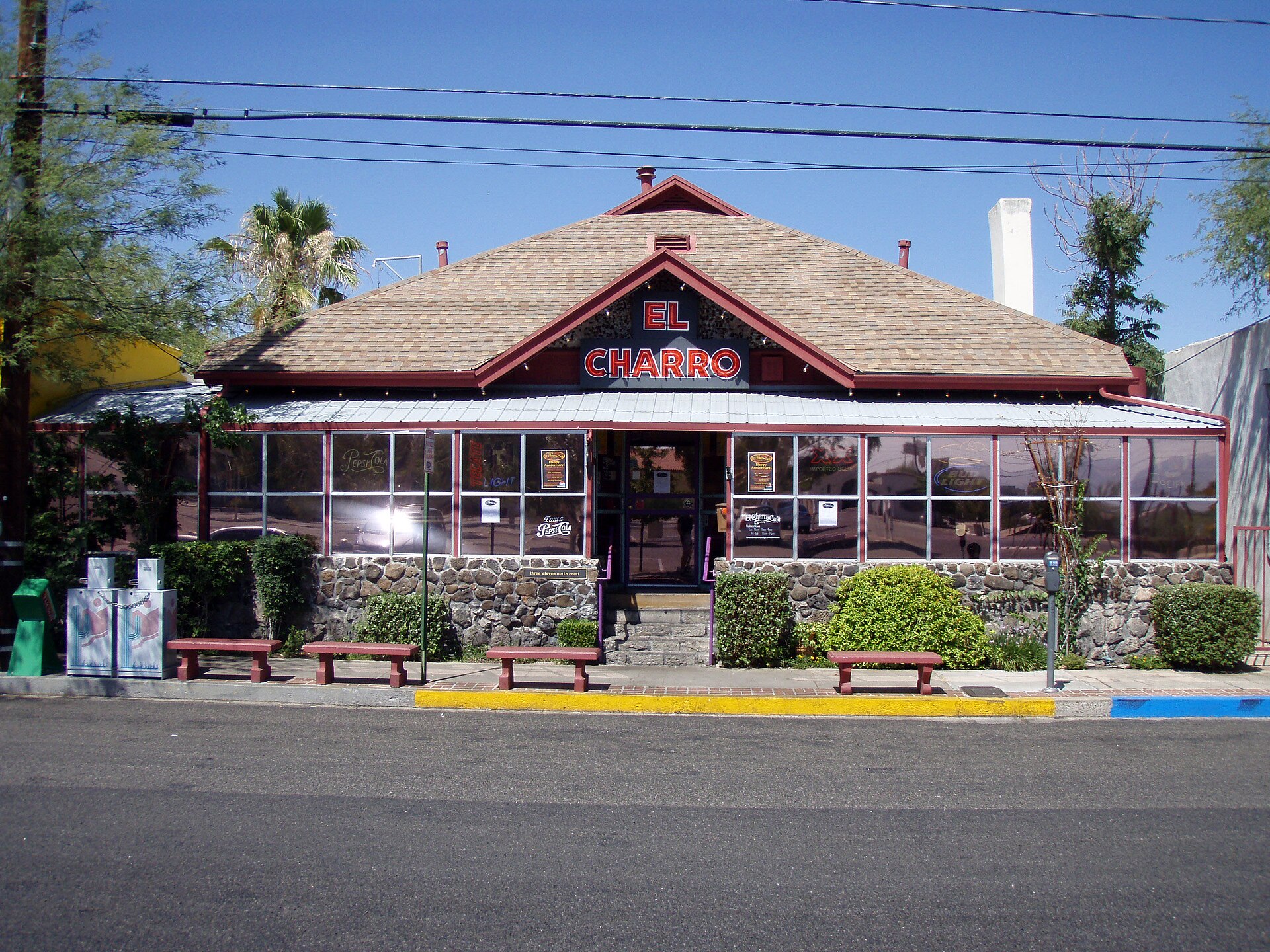

Walk down Court Avenue in Tucson’s El Presidio neighborhood and you might catch a strange sight overhead: a metal cage on a restaurant roof, filled with strips of beef drying in the desert sun. That is the carne seca at El Charro Café, and it has been part of the scenery here for longer than most Tucsonans have been alive.
El Charro opened in 1922. More than a century later, it is still run by the same family, which is why it often bills itself as the oldest Mexican restaurant in the country in continuous operation by one family. It is a big claim, and a fun one to test over a plate of enchiladas.
Tía Monica and a stonemason’s house
The story starts with Monica Flin, known to her family as Tía Monica. Her father, Jules Flin, was a French stonemason who came to Tucson in the late 1800s and worked on St. Augustine Cathedral. He also built a family home on Court Avenue in 1896, with basement walls made of rock from “A” Mountain.
Monica grew up loving Mexican cooking, and in 1922 she opened a small restaurant of her own and named it El Charro, after the Mexican horseman. By family accounts she borrowed money from her sister to get started on Fourth Avenue. She was one of Tucson’s early businesswomen, and she did a bit of everything: greeting guests, waiting tables and running the kitchen.
Pushed out, then home again
El Charro moved more than once over the years, eventually landing on Broadway. Then urban renewal arrived. The Broadway restaurant closed on July 1, 1968, to make room for the Tucson Convention Center and the redevelopment around it, according to the Arizona Daily Star.
So Monica went home. She reopened El Charro inside her father’s old house on Court Avenue, and that building is still the flagship today. Monica died in 1975 at age 90. By then, Carlotta Flores, a relative who had grown up calling her Tía Monica, had moved back to Tucson from California with her husband, Ray, in the early 1970s to take over the business.
The chimichanga question, and the roof full of beef
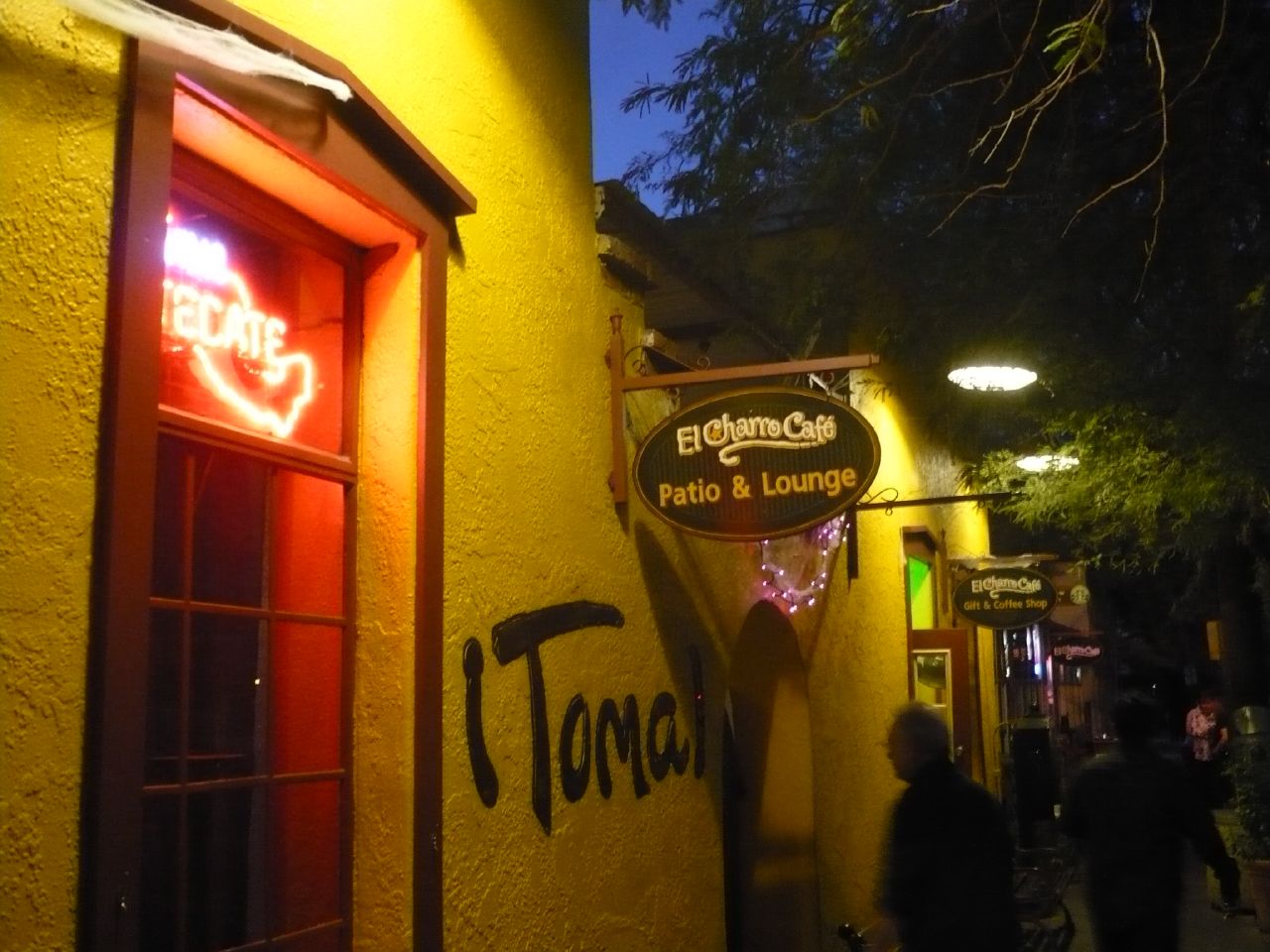
Ask around Tucson and someone will tell you the chimichanga was born at El Charro. The family’s version, as Carlotta Flores told KGUN 9, goes like this: Monica was cooking with the fryers hot, a burro slipped into the oil, and she started to swear in Spanish before swapping in a made-up word. “Chimichanga” stuck.
It is a great story, but it is a legend, not a settled fact. Phoenix has its own claim: Woody Johnson, founder of Macayo’s, said he started frying burritos in the 1940s, and nobody has found a record that proves who did it first. Others say the dish came north from Sonora. Tucson can enjoy the debate either way.
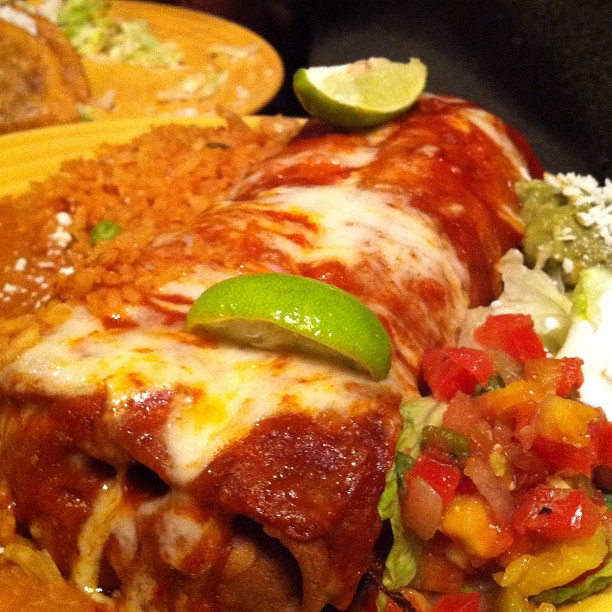
The carne seca is easier to verify, because you can see it. Beef is sliced thin, marinated in garlic and lemon juice, and hoisted into that rooftop cage to dry in the sun before it is shredded for tacos, enchiladas and more. Chef Gary Hickey estimates the restaurants go through more than 3,000 pounds of beef a week for it, Tucson Foodie reported in 2025.
A family business, a century on
Carlotta Flores is still the face of El Charro as owner and executive chef, and her family runs it with her. Her son Ray Flores leads Flores Concepts, the family company behind El Charro and its sister restaurants, and other family members handle day-to-day operations, catering and events. In 2021, Forbes named Carlotta to its 50 Over 50 list.
Today there are El Charro restaurants downtown, on East Sunrise Drive near Ventana Canyon, and in Oro Valley, plus an outpost listed at Tucson International Airport. The family ships tamales and other favorites nationwide, and rolled out a new brunch menu in 2025. The century mark came and went in 2022 with a celebration plate that paired carne seca with dishes from the original menu.
How to do El Charro right
- Go downtown first. The Court Avenue house is the original, built by Monica’s father, and it holds the most history.
- Order the carne seca. It is the house signature, and you can look up from the patio to see where it was made.
- Try the chimichanga anyway. Whether or not it was invented here, eating one at El Charro is a Tucson rite of passage.
- Walk the neighborhood. El Charro sits in the El Presidio Historic District, so leave time to stroll before or after your meal.
Plenty of restaurants have a good origin story. Very few still cook in the house where it happened, with the same family in the kitchen and the same beef drying on the roof. That is what makes El Charro worth the trip.
Explore more Tucson and Southern Arizona stories. And if you run a local business with a story worth telling, apply to be featured. It’s always free.
Visit El Charro Café
Where: 311 N. Court Ave., Tucson, Tucson and Southern Arizona (also in Oro Valley and on East Sunrise Drive)
Phone: 520-622-1922
Founded: 1922
Hours: See elcharrocafe.com
This spotlight draws on reporting from the Arizona Daily Star, KGUN 9, Tucson Foodie and Atlas Obscura, plus El Charro Café’s own website. Top photo: Daquella manera, CC BY 2.0, via Wikimedia Commons.