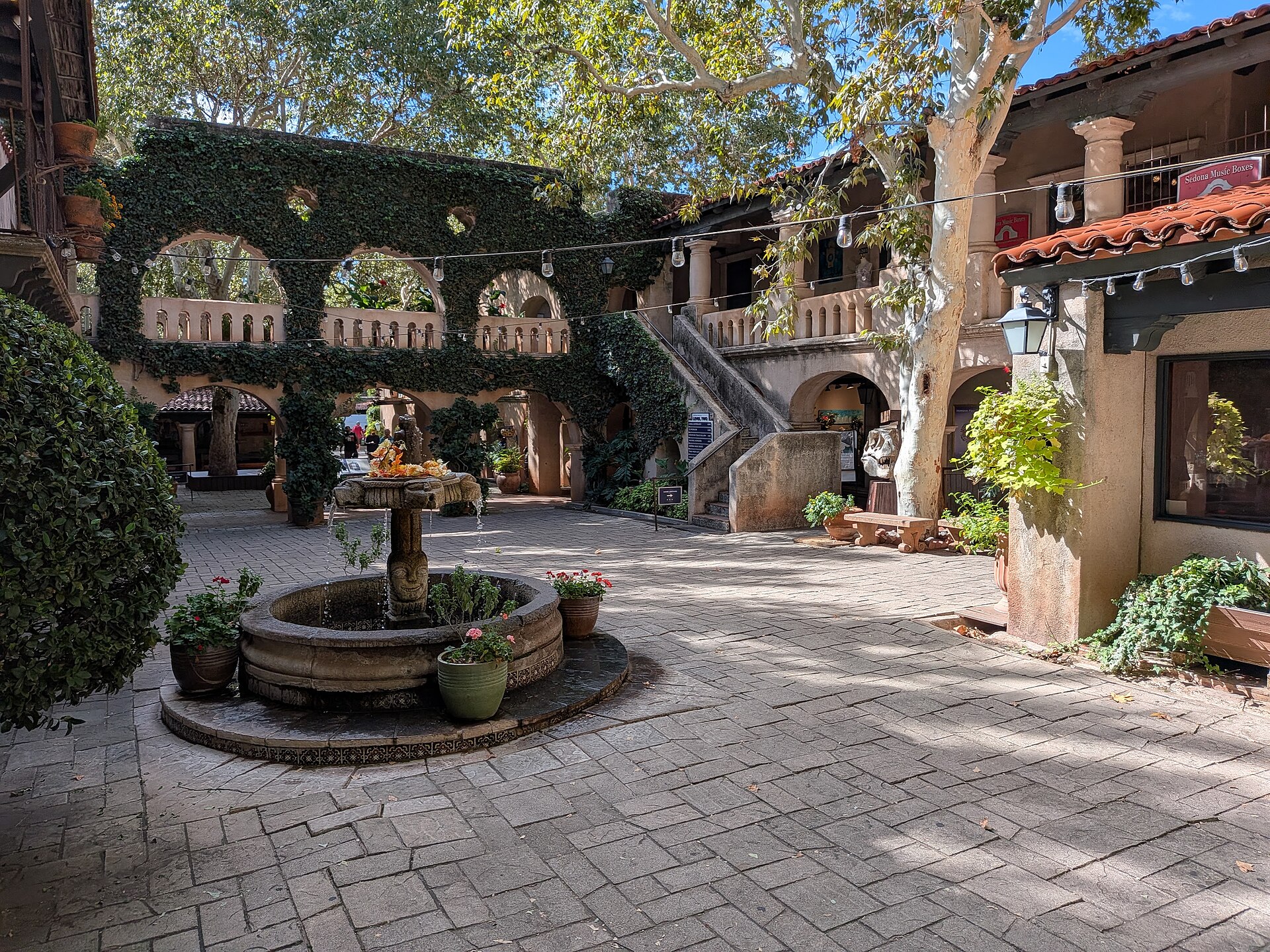

Step off State Route 179 at the Oak Creek bridge and the traffic noise fades fast. Under a canopy of old sycamores, the paths turn to worn pavers, a fountain murmurs in a courtyard, and a bell tower rises above the treetops. It feels less like a shopping center than a small town that has been here for centuries.
It hasn’t, of course. Tlaquepaque Arts and Shopping Village opened in 1973. But the people who built it worked very hard to make you forget that, and more than fifty years later, the illusion still holds.
A Nevada developer with Mexico in his sketchbook
The village began with Abe Miller, a Nevada businessman who had spent decades wandering Mexico slowly on purpose. According to a 1973 profile in Arizona Highways, he lingered in plazas, haciendas and adobe chapels so he could remember them, collecting impressions for a project that did not yet have a home.
He found that home in Sedona: a few acres on the banks of Oak Creek, shaded by mature sycamores and pines. The grove had belonged to Harry and Ruby Girard, whose garden nursery sat next door. Miller’s goal, as the Sedona Museum puts it, was to “bring the feel of an old Mexican village to Sedona.”
He named it for Tlaquepaque, the old arts town on the edge of Guadalajara famous for its pottery and its parián, a market square ringed with shops and cafes. That square became the loose model for the Sedona plan.
Built around the trees, not through them
Miller brought in architect Robert (Bob) McIntyre and contractor Bill Herrick, and the three traveled through Mexico together with cameras and sketch pads. They came home with ideas and with the real thing: tile, mission bells and wrought iron railings. Ground was broken in 1971.
The rule on site was simple. The sycamores stayed. Builders did not cut or trim them, and the plans bent to fit the trunks and branches instead. That is why walls curve where they do, and why a courtyard can feel like it grew up around its tree rather than the other way around.
Miller also favored heart over polish. City preservation records note that he hired workers for their enthusiasm more than their refined skills, chasing the slightly irregular, handmade look of a real village. Even the mortar lines feel human.
The little chapel at the heart of it
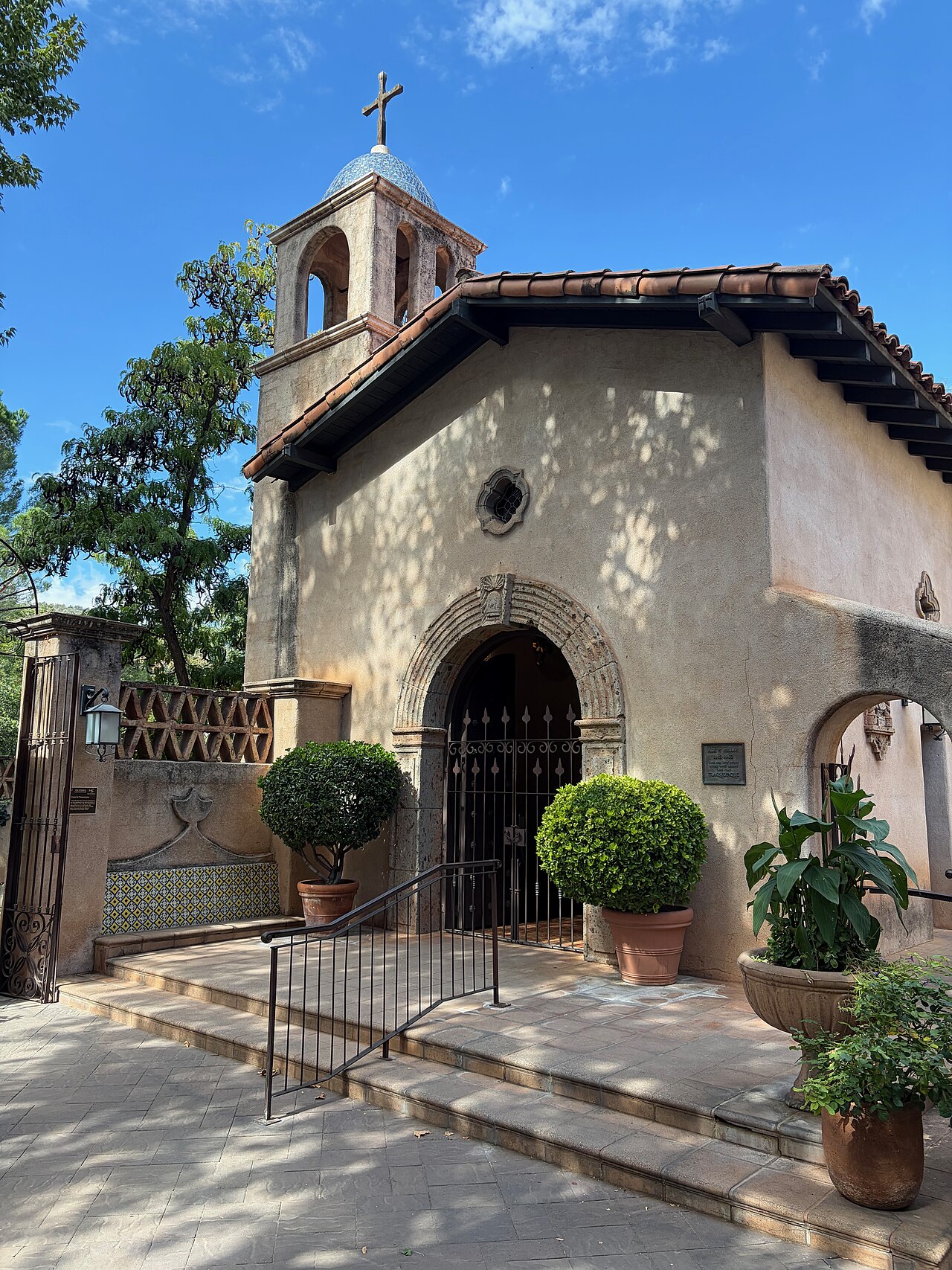
Tucked into the south side of the village is a tiny mission-style chapel, finished in the early 1970s as part of the original build. It seats only a few dozen people, with carved wooden doors, wrought iron gates and a bell tower crowned by a cross.
Inside, Arizona artist Eileen Conn painted the large mural behind the altar, roughly 11 by 12 feet, showing a row of saints with Jesus above them. Deanne Sabek designed the stained glass, using hand-blown German glass in colors meant to echo the red rocks outside. The City of Sedona now lists the chapel among its historic landmarks. It is not a regular church; it opens for weddings and special events, though you can admire it from the courtyard.
Galleries, artisans and a calendar full of fiestas
When the village opened in 1973, only a handful of spaces were leased, and Miller’s daughter Carolyn ran leasing and operations. Today Tlaquepaque counts more than 50 shops, galleries and restaurants spread across a north and a south side of the highway. Wendy Lippman serves as resident partner and general manager.
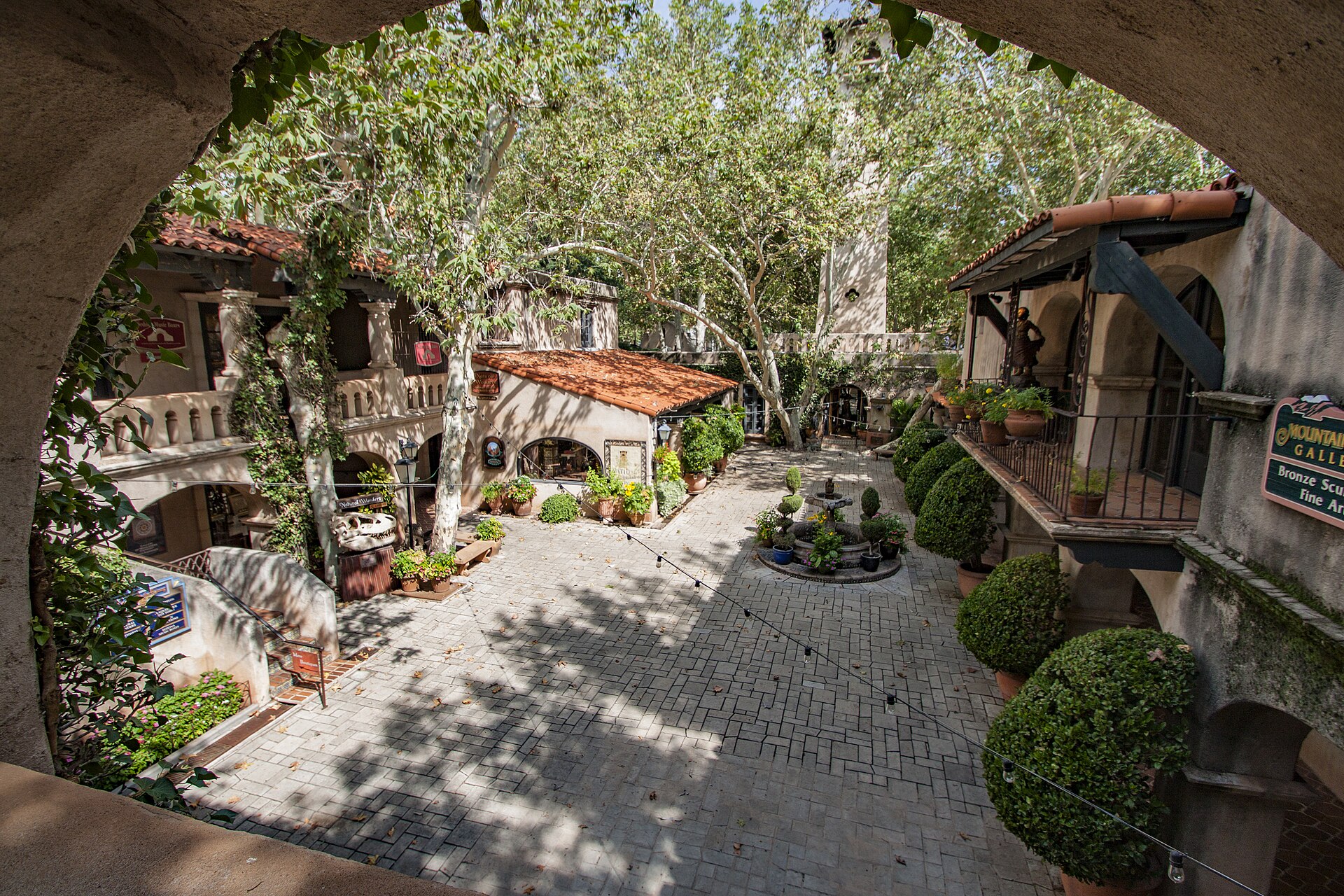
The mix leans heavily toward art: fine art and bronze sculpture, Native American rugs and jewelry, quilts, glass and contemporary work, plus boutiques, a brewery, Mexican restaurants and sweet shops. Galleries host First Friday evenings with artist receptions, and the village keeps a busy year of free events, from flamenco in the courtyard to Día de los Muertos in the fall.
The best known is the Festival of Lights each December, a tradition that dates back nearly to the village’s opening. Thousands of luminarias, more than 6,000 by recent counts from Visit Sedona, glow along the walkways and patios at dusk.
How to do Tlaquepaque right
- Go early on a weekday. Mornings are cooler and calmer, the light through the sycamores is lovely, and parking is far easier than on a busy weekend afternoon.
- Wander both sides. Tlaquepaque North and South each have their own courtyards and shops. Grab the village map and give yourself time to get a little lost.
- Talk to the gallery folks. Many galleries represent working Southwest artists, and staff are usually happy to share the story behind a bronze, a rug or a piece of glass. Time a visit for a First Friday evening if you can.
- Look up and look closely. Find the chapel, the bell tower and the fountains, and notice the hand-set tile and ironwork. Then check the events calendar for festivals before you plan your trip.
Plenty of places try to look old. Tlaquepaque earned its age honestly, one sycamore at a time, and that is what keeps locals and visitors coming back to walk its courtyards decade after decade.
Explore more Sedona and Verde Valley stories. And if you run a local business with a story worth telling, apply to be featured. It’s always free.
Visit Tlaquepaque Arts and Shopping Village
Where: 336 State Route 179, Sedona, Sedona and Verde Valley
Phone: 928-282-4838
Founded: 1973
Hours: See tlaq.com
This spotlight draws on reporting from Arizona Highways (August 1973), the Sedona Museum via Clio, City of Sedona historic preservation records, Verde Independent, Visit Sedona and tlaq.com. Top photo: Seasider53, CC BY 4.0, via Wikimedia Commons.